90-Day Marketing Strategy for New Business: Step-by-Step to First Customers
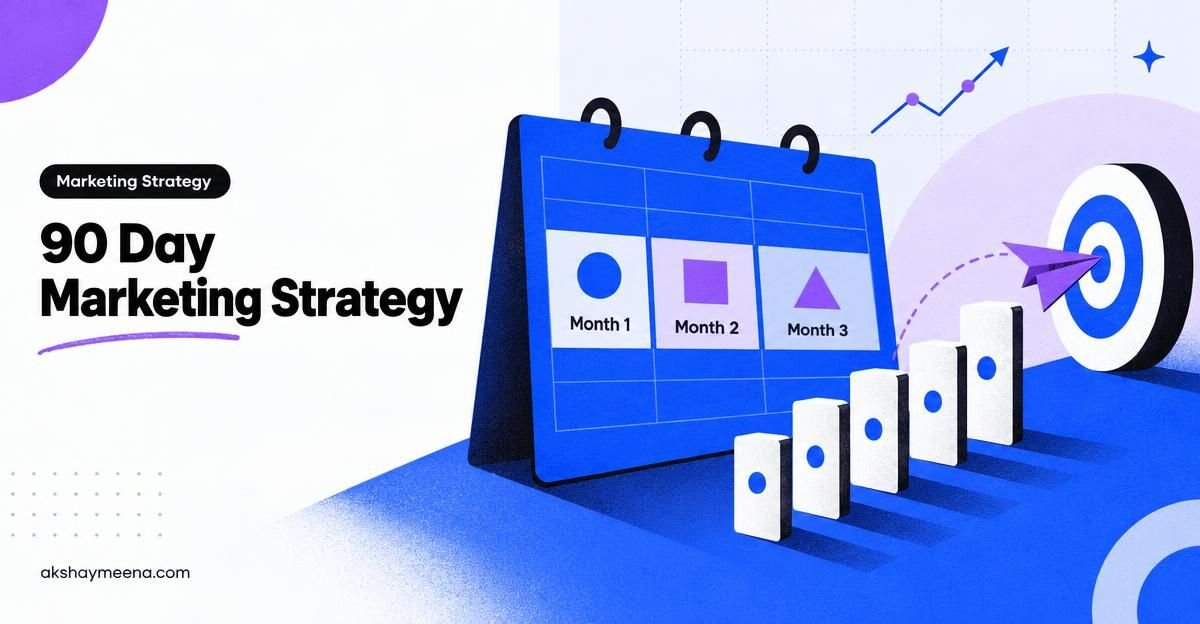
If you’re building a marketing strategy for new business and want real traction in the first 90 days, you need more than guesswork and broad advice. I’ve worked with startups that wasted months on busywork instead of focusing on what actually brings in early customers. You don’t need a big team or a huge budget to start seeing results, you need a practical, step-by-step plan tailored for the messy, resource-strapped reality of launching something new.
Here’s my 90-day marketing plan for new businesses: every week has a purpose, every tactic ties directly to early customer acquisition. I’ll walk you through market research, audience targeting, channel selection, messaging, and hands-on actions that drive results, not just vanity metrics.
TL;DR
- Start with focused market research, audience profiling, and clear value proposition
- Set measurable goals and create a realistic 90-day marketing plan for new business
- Execute in phases: research and prep, launch and outreach, optimize and double down on what works
- Track KPIs and iterate to land your first customers
Introduction to Marketing Strategy for New Businesses
An effective 90-day marketing strategy for a new business involves focused market research, audience targeting, clear positioning, channel selection, and phased execution, so you can move from zero to your first customers with measurable milestones, even on a small budget.
Most early-stage founders I talk to want a simple answer to: “What should I do, step by step, to get my first real customers?” You need to balance urgency with structured thinking. The trick is to avoid spreading yourself across too many tactics or endlessly tweaking your brand while never launching. This framework delivers focus to help you act and course-correct fast.
Why a Focused 90-Day Plan Matters
Starting a business without a tight, practical marketing strategy is like driving in fog. A 90-day window gives you the right balance: enough time to test and learn, but not so long that you get stuck in analysis. I’ve seen founders waste budget trying everything at once, then struggle to prove what actually works. A phased plan means you can measure, adjust, and win those crucial early customers before you run out of steam.
Understanding Your Market and Customers
Before you spend a rupee or a minute on marketing, you need to know who you’re selling to and what makes them care. Start here to avoid building on sand.
Conducting Market Research
Market research means gathering real evidence about your potential customers and your competition. Talk to at least 10 people who fit your ideal user (not friends or family) and ask about their pain points, what solutions they currently use, and what would make them switch. Tools like Google Trends and AnswerThePublic help spot demand and search intent.
Competitor analysis is a must. List the top 3 to 5 alternatives your audience is using. Study their messaging, pricing, positioning, and reviews. This isn’t about copying, it’s about finding the gaps. I use a simple table like this with clients:
| Competitor | Strengths | Weaknesses |
|---|---|---|
| Competitor A | Great support, established brand | Outdated tech, slow onboarding |
| Competitor B | Cheap, good integrations | Poor reviews, clunky UX |
Defining Your Target Audience and Positioning
Target audience segmentation means dividing your potential customers into meaningful groups based on their needs, behaviors, or demographics. For a startup, start narrow: pick the single audience segment with the highest pain or readiness to try something new.
Positioning is how you want your business to be perceived in their minds. Articulate your unique value proposition (UVP) in one sentence: “We help [target audience] achieve [outcome] by [how you’re different].” If you can’t say it out loud in 10 seconds, it’s too complex.
Setting Clear Goals and Budgeting
Your marketing plan for new business needs sharp goals and a realistic budget. This avoids wasted spend and lets you measure progress honestly.
Establishing Measurable Objectives
Set 2 to 3 main marketing goals for your first 90 days. Good goals are specific, measurable, and realistic for your stage. For example:
- “Land 10 paying customers by Day 90”
- “Grow email list to 300 qualified leads”
- “Achieve 500 targeted website visits per month”
Each goal should have a number attached, vanity metrics like “increase awareness” don’t help at this stage. Tie your activities to customer acquisition or pipeline growth.
Allocating Your Marketing Budget Effectively
Most startups I work with spend too much on branding or agencies, not enough on direct-response channels that can be tested fast. For a lean marketing budget for startups, split into:
- 30% for content and SEO (website, blog, basic tools)
- 30% for direct outreach (email, LinkedIn, small paid ads)
- 20% for social media and brand-building (organic posts, design)
- 20% as a buffer for experiments or doubling down on early wins
Review this every month. If a channel is working, shift more budget there.
Building Your Go-To-Market Strategy
Your go-to-market strategy is the action plan for how you’ll reach your target audience and convert them to customers. For new businesses, this means picking a few high-leverage channels, nailing your message, and executing quickly.
Choosing the Right Marketing Channels
Don’t fall into the trap of trying every marketing channel at once. For most startups, these are the best places to start:
- SEO and content marketing: Build a simple, fast-loading website with 3 to 5 core pages. Start a blog with 2 to 4 articles focused on bottom-of-funnel topics. My 90-day SEO content strategy guide has a step-by-step approach.
- Social media: Focus on one platform where your audience is active. For B2B, that’s often LinkedIn. For B2C, it might be Instagram or Facebook. Consistency beats volume.
- Email marketing: Set up a basic lead magnet and nurture sequence. Tools like MailerLite or ConvertKit are cheap and simple.
- Direct outreach: Targeted LinkedIn or email outreach works well for B2B, especially if you use clear, value-driven pitches.
Avoid spending on paid ads until you have clear messaging and proof that your landing pages convert. Want a deeper breakdown? Check my B2B content marketing strategy article for channel-by-channel tactics.
Crafting Your Unique Value Proposition
Your UVP is the single biggest lever for early traction. It should answer: Why should someone buy from you instead of a competitor? Test your UVP with real prospects, if they nod and say “That’s exactly what I need,” you’re on the right track. If you get blank stares, refine it until it’s clear and compelling.
The 90-Day Marketing Plan Timeline
This timeline gives you week-by-week focus, with milestones you can actually hit. I recommend printing it out and checking off tasks.
Month 1 to Research and Foundation
- Week 1: Interview target customers, map the competitor landscape, define your ideal audience, and write your first draft UVP.
- Week 2: Buy your domain, launch a basic website with landing page, about, and contact.
- Week 3: Set up Google Analytics and Search Console. Write first 2 to 3 blog posts targeting urgent customer questions.
- Week 4: Create company profiles on your audience’s main social platform. Set up a simple email capture form (offer a lead magnet like a checklist or quick guide).
Month 2 to Launch and Initial Outreach
- Week 5: Refine your UVP and homepage messaging based on feedback. Start posting and engaging on your chosen social channel 3 to 4 times per week.
- Week 6: Launch your first email nurturing sequence for new leads. Reach out to 20 to 30 potential customers or partners directly (manual LinkedIn or email).
- Week 7: Pitch yourself as a guest on 2 to 3 relevant podcasts or newsletters (even small ones). Try a micro-budget paid ad ($50-100) if confident in your landing page.
- Week 8: Collect testimonials, reviews, or small case studies from early users. Start a simple content partnership or co-branding activity (e.g., a joint webinar or checklist swap).
Month 3 to Optimization and Customer Acquisition
- Week 9: Analyze channel performance: which sources drive most visits, signups, or sales? Double down on the top 1 to 2 channels.
- Week 10: Split-test your main landing page headline and call to action. Update social profiles and email copy based on learnings.
- Week 11: Ask for referrals from your earliest users. Create a simple ambassador or affiliate program if relevant.
- Week 12: Tally results against your original goals. Identify 2 to 3 repeatable tactics to scale in the next quarter. Celebrate small wins!
Here’s how the 90-day plan compares to typical new business approaches:
| 90-Day Plan | Typical Approach |
|---|---|
| Laser-focused, week-by-week milestones | Random acts of marketing, little tracking |
| Rapid feedback and iteration | Months spent perfecting brand or website |
| Channel selection based on audience evidence | Trying every channel, chasing trends |
Measuring Success and Adjusting Your Strategy
No marketing strategy for startups is perfect on day one. What matters is the speed and discipline with which you measure and adjust. Here’s how to stay accountable.
Key Metrics to Track
Pick 3 to 5 KPIs that directly tie to customer acquisition. For most early-stage businesses, I recommend:
- Number of qualified leads (email signups, demo requests, etc.)
- Cost per acquisition (total spend divided by new customers, or CAC)
- Website conversion rate
- Channel-specific ROI (which source leads to actual sales?)
- Brand awareness proxies (social mentions, direct searches for your brand)
Use free tools like Google Analytics, Search Console, and email platform dashboards to track these.
Iterating Based on Feedback
Actively seek feedback from early users. What almost stopped them from buying? What delighted them? Use these insights to refine both your product and your marketing. I once helped a B2B SaaS founder double their conversion rate just by rewriting their landing page headline based on the exact words users used in interviews. Don’t be precious about your first ideas, they’re drafts, not dogma.
Key Takeaways
- Focus on evidence, not assumptions: research and real conversations first
- Tighten your marketing plan for new business into weekly, measurable actions
- Prioritize 1 to 2 channels where your audience already spends time
- Track KPIs that tie directly to customer acquisition and iterate ruthlessly
- Be disciplined with your budget, early-stage startups need to see results fast
Frequently Asked Questions
What are the first steps in creating a marketing strategy for a new business?
Start by researching your market and competitors, then define your ideal target audience. Create a clear, simple unique value proposition that addresses a real need. Use this foundation to select marketing channels and set measurable goals for your first 90 days.
How do I identify and profile my target audience?
Interview potential customers to understand their pain points, buying triggers, and preferred solutions. Segment your audience based on need or behavior, not just demographics. Create a short profile or persona to guide your messaging and channel choices.
What marketing channels are best for startups on a budget?
SEO content marketing, targeted social media (one platform), and direct email or LinkedIn outreach are effective and cost-efficient channels for startups. Only invest in paid ads once you have messaging and landing pages that convert.
How can I measure the success of my marketing plan?
Track a small set of KPIs such as qualified leads, customer acquisition cost (CAC), website conversion rate, and sales or signups. Use free analytics tools to monitor these weekly, and adjust your plan if you’re not seeing progress.
What is a go-to-market strategy and why is it important?
A go-to-market strategy is a structured action plan for how you’ll reach your target customers and win early sales. For startups, it keeps focus on high-impact activities and avoids wasted effort on channels or audiences that won’t convert early.
How do I create brand awareness quickly as a new business?
Focus on messaging that solves a real problem and get in front of your audience where they already spend time. Partner with other small brands, appear on podcasts, or co-host webinars to tap into existing trust and audiences fast.
How should I allocate my marketing budget in the first 90 days?
Allocate budget to fast, measurable activities: website and content, direct email or outreach, and basic social media. Reserve a small portion for experiments or doubling down on what delivers early results. Review and reallocate monthly.
Ready to Win Your First Customers Fast?
Building a marketing strategy for new business isn’t about perfection, it’s about action, evidence, and rapid learning. If you want help implementing this 90-day plan or want me to review your go-to-market strategy, get in touch for consulting or connect with me on LinkedIn to keep the conversation going. Don’t wait for the perfect moment, start now and let the market tell you what works.

