Email Marketing Automation: Must-Have Flows for Every Business in 2026
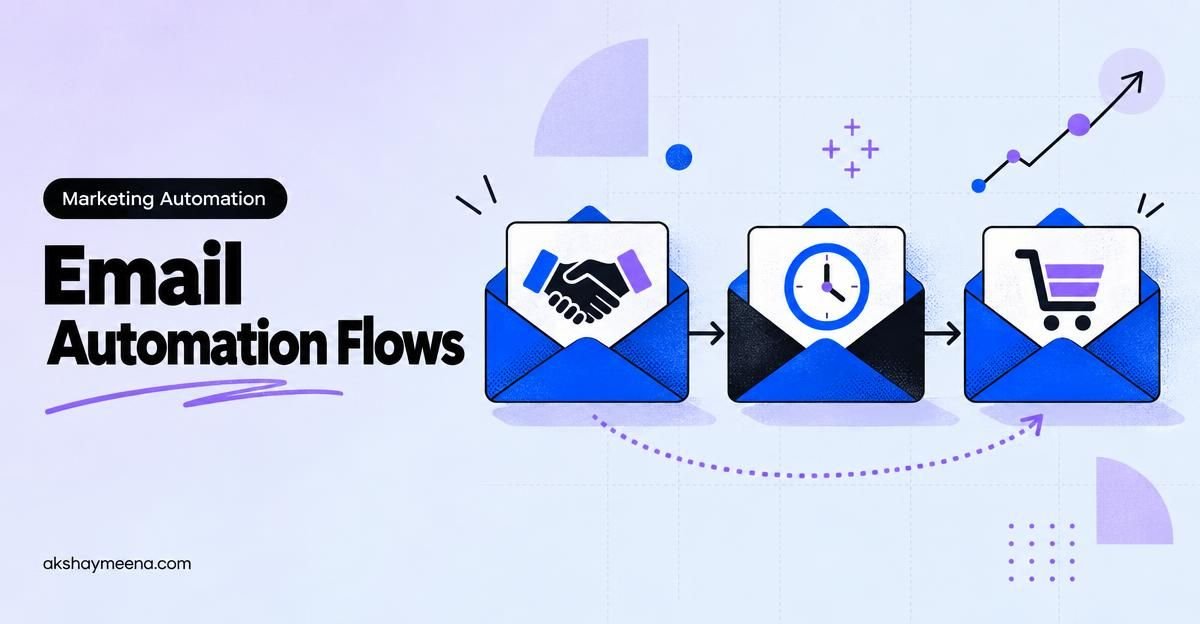
If you want your emails to actually reach customers and drive business in 2026, you need to treat email marketing automation as more than a checkbox. Most brands still fumble through clunky workflows or rely on outdated sequences that barely nudge results. I’ve seen this firsthand with B2B and e-commerce clients who wonder why their lists stall or their open rates flatline.
Here’s the fix: focus your energy on proven, strategic automation flows that match how buyers act today. With the right email marketing automation tools, you can trigger perfectly-timed emails, segment lists, and recover lost sales almost on autopilot. If you’re serious about lifting engagement, conversions and deliverability, it’s time to move beyond the basics.
TL;DR
- Run these core email marketing automation workflows in 2026: welcome series, drip campaigns, abandoned cart, segmentation-based targeting, and lead nurturing.
- Pick a platform that matches your business model (e-commerce, SaaS, B2B) and integrates with your CRM for smarter triggers.
- Boost deliverability and engagement by keeping lists clean, segmenting, and personalizing content at every step.
- Prepare for the future by experimenting with AI-powered automation and cross-channel integrations.
Understanding Email Marketing Automation in 2026
Email marketing automation in 2026 means using triggers and rules to send relevant, personalized emails automatically based on customer behavior, so businesses can engage, nurture and convert leads with less manual effort.
What is Email Marketing Automation?
Email marketing automation is the use of software to automatically send targeted, behavior-based emails to contacts at the right moment. These automated email campaigns are triggered by specific actions (like signing up, clicking a link, or abandoning a cart) and are powered by defined workflows that deliver the right message without manual intervention. It’s a smarter way to scale communication, improve engagement, and drive conversions at every stage of the customer journey.
Why Automation Matters for Modern Businesses
If you’re running any business at scale, manual emailing just doesn’t cut it. Email marketing automation lets you deliver timely, relevant messages 24/7, whether you’re nurturing cold leads, welcoming new subscribers, or chasing abandoned carts. The result? Higher open and click rates, smoother lead nurturing, and more revenue. In my experience, teams that automate see faster pipeline growth and more consistent ROI, especially when they tie their tools directly to sales and CRM systems.
Essential Email Automation Workflows Every Business Should Run
Businesses should implement these email marketing automation workflows in 2026: welcome series to greet new subscribers, drip campaigns for ongoing engagement, abandoned cart emails for sales recovery, segmentation-based targeting for personalization, and lead nurturing sequences for guiding prospects through the funnel.
Welcome Series: Making a Strong First Impression
A welcome series is a set of automated emails sent to new subscribers or customers. Think of it as your digital handshake. It’s your chance to introduce your brand, set expectations, and move people toward their next action (like making a purchase or booking a demo).
- Best practice: Make it a sequence of 3-4 emails spaced over the first week. The first email should land instantly, thanking the subscriber and delivering any promised incentive.
- Tip: Personalize the series based on how they signed up (newsletter, lead magnet, purchase) and track which subject lines get the most opens.
I’ve found that brands who split-test their welcome series against a single generic message often see 2-3x better engagement.
Drip Campaigns: Nurturing Leads Over Time
Drip campaigns are a series of automated emails sent at set intervals to educate, nurture, or qualify leads. They’re especially effective for complex products, longer sales cycles, or content-heavy businesses.
- Use drip campaigns for onboarding, product education, or re-engagement.
- Each step should drive a single, clear action, reading a guide, booking a demo, or replying with a question.
- Monitor drop-off points and tweak your copy or timing as needed.
For B2B and SaaS, drip campaigns mapped to your marketing funnel (see content marketing funnel strategies) keep prospects moving toward conversion without overwhelming them.
Abandoned Cart Emails: Recovering Lost Sales
An abandoned cart workflow triggers emails when a shopper adds items to their cart but doesn’t complete checkout. This is the single highest-ROI automation for e-commerce, often recovering 10-20% of abandoned carts when done right (according to Shopify’s 2024 data).
- Send the first reminder within 1-2 hours of abandonment, then a follow-up 24 hours later.
- Include product images, a clear call to action, and (if possible) a limited-time incentive.
- Test the tone, sometimes a helpful nudge works better than a hard sell.
Remember: Always respect privacy and unsubscribe signals to avoid hurting deliverability.
Segmentation-Based Targeting for Personalization
Segmentation means dividing your audience based on attributes like behavior, interests, or purchase history, then sending tailored automated emails. Good segmentation is what makes your automation feel personal instead of like spam.
- Segment by lifecycle stage (prospect, customer, repeat buyer), engagement level, or industry.
- Use dynamic content blocks to show different offers or stories to each segment within the same campaign.
- Automate re-engagement emails for inactive contacts to clean up your list and improve sender reputation.
I’ve seen segmentation lift open rates by 20-40% vs generic blasts, especially in B2B where one-size-fits-all messaging kills trust.
Lead Nurturing Sequences for B2B and SaaS
Lead nurturing is the process of guiding prospects from initial interest to sales-readiness with a series of targeted, automated emails. It’s absolutely essential for B2B and SaaS, where sales cycles are longer and multiple stakeholders are involved.
- Set up multi-step sequences customized for different personas and buying stages.
- Include value-driven content: case studies, comparison guides, invite to webinars, or key product updates.
- Connect email triggers to CRM data so your sequence adapts based on pipeline changes.
This is where tight CRM integration pays off, your automation stops when a deal moves to closed-won, or adapts if a lead visits pricing pages. I’ve built these for SaaS clients using HubSpot and ActiveCampaign with strong results.
Sample Automation Flows by Business Model
| Business Model | Essential Automation Flow | Key Trigger |
|---|---|---|
| E-commerce | Welcome series, abandoned cart, win-back campaigns | Signup, cart abandonment, inactivity |
| SaaS | Onboarding drip, usage tips, upgrade prompts | New user, feature discovery, plan renewal |
| B2B Services | Lead nurturing, appointment reminders, post-meeting follow-ups | Form fill, meeting booked, pipeline stage change |
Choosing the Right Email Marketing Automation Tools
Your email marketing automation platform will make or break your success. Pick a tool that fits your workflows, integrates with your CRM and other marketing automation software, and gives you granular control over triggers, segmentation, and reporting.
Key Features to Look For
- Visual workflow builder: Drag-and-drop editors help you map complex journeys without code.
- Advanced segmentation: The platform should allow deep audience filtering and dynamic content.
- Multi-channel triggers: Think email, SMS, WhatsApp, or even push notifications in one place.
- Integrations: Native CRM and e-commerce integrations are crucial for reliable data syncs.
- AI-powered suggestions: In 2026, look for platforms that recommend send times, subject lines, or even content (like Mailchimp and HubSpot do today).
Top Platforms in 2026 and Their Strengths
| Platform | Best For | Unique Feature |
|---|---|---|
| Klaviyo | E-commerce | Deep Shopify and WooCommerce integration, robust abandoned cart |
| HubSpot | B2B, SaaS, Agencies | Native CRM + advanced workflows, AI subject line suggestions |
| ActiveCampaign | SMBs, consultants | Powerful automation, sales CRM, site tracking |
| Mailchimp | Content creators, small businesses | AI-assisted content, simple journeys |
Don’t just pick what’s popular: match your choice to your budget, audience size, and integration needs.
Optimizing Deliverability and Engagement
If your emails don’t make it to the inbox, automation is useless. In 2026, deliverability will depend even more on list health, sender reputation, and real engagement.
Best Practices for List Hygiene
- Regularly clean your lists, remove hard bounces, opt-outs, and inactive addresses.
- Use confirmed opt-in (double opt-in) for new signups to protect your sender reputation.
- Ask subscribers to update their preferences yearly, ideally via automation.
List pruning feels scary, but in my experience, smaller engaged lists perform far better and keep your domain out of spam folders. Deliverability experts like Postmark agree.
Content Strategies to Boost Open and Click Rates
- Write subject lines that create curiosity or promise value, test at least two per campaign.
- Use concise, skimmable copy and a single, prominent call to action.
- Personalize using merge tags (like first name) and dynamic content blocks (like recent purchases).
- Don’t forget the preheader text, it’s your second subject line.
Automated A/B testing is your friend here. Most email marketing automation platforms make this easy, use the data to constantly refine.
Future Trends and Integrations in Email Marketing Automation
The biggest shift I’m seeing is the rise of AI and smarter integrations. Automation platforms are getting good at predicting what your audience wants, not just reacting to triggers.
AI and Machine Learning in Automation
AI in email marketing automation is moving from hype to practical reality. Expect more platforms to offer:
- Send time optimization based on engagement patterns
- Real-time content personalization using past behavior
- Predictive segmentation (finding future buyers before they raise their hand)
Already, tools like HubSpot and Klaviyo are using machine learning to auto-tune subject lines and content blocks. My advice: start experimenting with these features now so you’re not playing catch-up in a year or two.
Integrating Automation with CRM and Other Marketing Channels
Integration is the glue that makes automation smart. By syncing your email marketing automation tools with your CRM, you can trigger emails based on sales stages, website activity, or even offline events.
- For B2B and SaaS, CRM email integration means marketing can hand off warm leads to sales instantly, or pause automations when deals close.
- E-commerce brands should connect automation with customer behavior data for smarter upsell and review requests.
- Cross-channel automation lets you coordinate Email, WhatsApp, and SMS, see my piece on WhatsApp automation for business for practical examples.
If you want to dig into automation strategy or integration roadmaps, connect with me on LinkedIn, I share playbooks and answer workflow questions regularly.
Key Takeaways
- Master these automation flows: welcome series, drip campaigns, abandoned cart, segmentation-based, and lead nurturing.
- Choose email marketing automation platforms that fit your business and tech stack.
- Keep deliverability high with strict list hygiene and continuous engagement optimization.
- Embrace AI features and CRM integrations to future-proof your strategy.
Frequently Asked Questions
What is email marketing automation and how does it work?
Email marketing automation uses software to send targeted emails based on defined triggers or customer actions (like sign-ups or purchases). This helps businesses engage leads, nurture prospects, and recover sales efficiently, without manual effort. Automation workflows can be simple or highly personalized depending on your goals and tools.
Which email marketing automation tools are best for small businesses in 2026?
Top tools for small businesses in 2026 include Mailchimp for ease of use and simplicity, ActiveCampaign for automation depth, and Klaviyo for e-commerce. Choose a platform that matches your business model, required integrations, and budget to get the most from your workflows.
How do I create an effective welcome series?
To build a great welcome series, send the first email instantly after signup, followed by 2-3 more over a week. Personalize content to the signup source, deliver promised incentives, and include a strong call to action. Continuously test subject lines and timing for the best engagement results.
What are the benefits of abandoned cart email workflows?
Abandoned cart email workflows help recover lost sales by automatically reminding shoppers about unpurchased items. They often recover 10-20% of abandoned carts, boost customer retention, and deliver high ROI for e-commerce businesses. Timely, personalized emails perform best.
How can segmentation improve email marketing automation?
Segmentation divides your audience by demographics or behavior, so you can send more personalized, relevant emails automatically. This approach increases open and click rates, reduces churn, and keeps your list engaged, which is key for deliverability and conversion.
What strategies improve email deliverability in automated campaigns?
Maintain list hygiene by removing bounces and inactive contacts, use confirmed opt-in, send relevant content, and monitor engagement. Regularly test emails for spam triggers and authenticate your sender domain (like SPF, DKIM). High engagement helps keep your emails out of spam folders.
How does lead nurturing differ in B2B versus e-commerce email automation?
In B2B, lead nurturing focuses on building trust and educating prospects with longer sequences tailored to stages and personas. For e-commerce, automation is shorter and more transactional, aiming to drive repeat purchases or recover carts. Both require personalization, but B2B often needs tighter CRM integration.
Let’s Build Your Automation Engine
Email marketing automation is not just about software, it’s about designing flows that fit your business and buyers. If you want to get more out of every campaign or need help choosing the right tools for 2026, work with me to build an automation strategy that grows your pipeline and protects deliverability. Ready to see real results? Let’s talk.

